A well-maintained urban cycling and walking path in Nelson, British Columbia, paved in smooth asphalt with a clearly marked center line and green painted bike lane. The path gently curves toward a distant view of Kootenay Lake and tree-covered hills. On one side, sturdy metal bike racks and a modern bench face the water; on the other, reflective bollards separate the route from a quiet residential street. Soft late-afternoon sunlight creates long, gentle shadows and highlights the fresh pavement markings. Photographic realism, shot at eye level with a wide-angle lens and sharp focus throughout, conveying a professional, dependable mood that emphasizes safe, inviting active transportation infrastructure without showing any people.

Infrastructure Projects

Explore current and past cycling and walking projects, timelines, and how they improve everyday travel.

Services
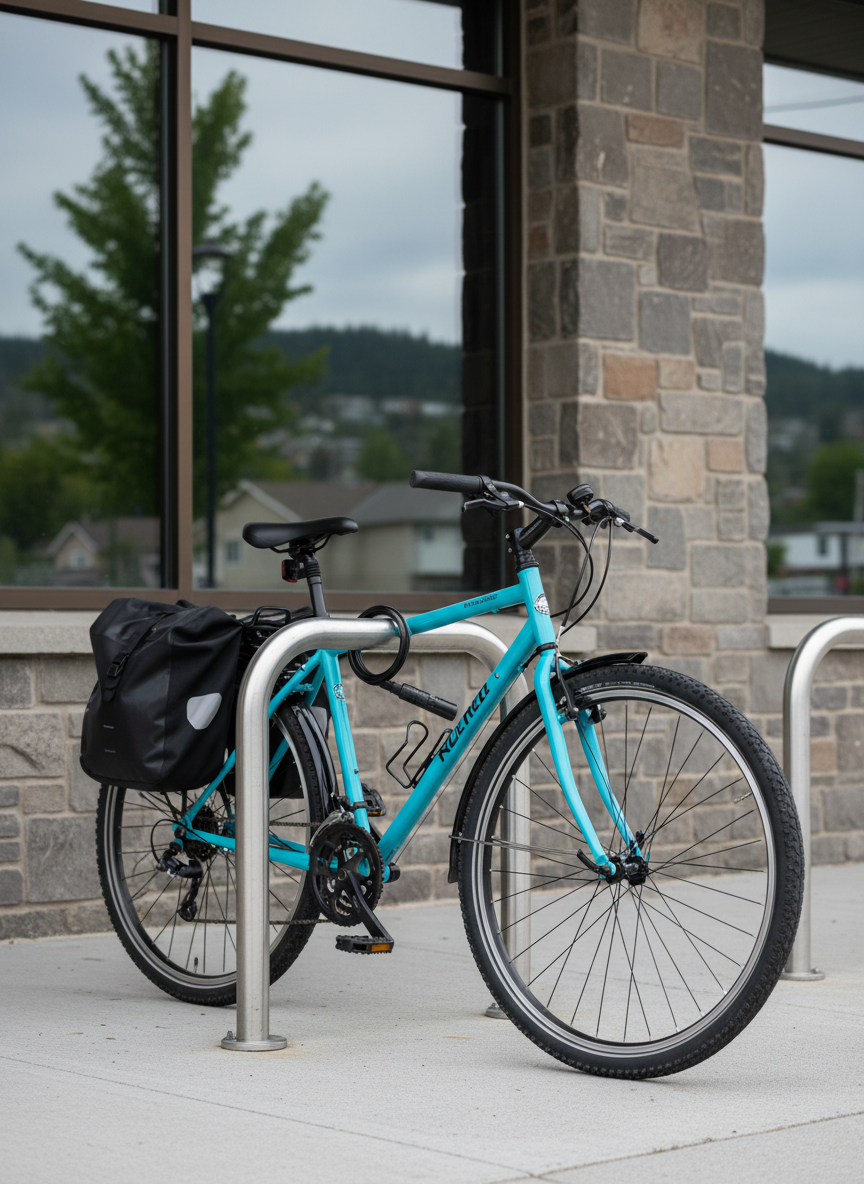
A close-up, photographic view of a bright turquoise commuter bicycle locked to a modern brushed-steel bike rack outside a small-town civic building in Nelson. The bike’s frame is clean and slightly reflective, with a weatherproof pannier, sturdy fenders, and wide, grippy tires. Behind it, the building’s stone façade and large glass windows subtly reflect nearby trees and a faint outline of Nelson’s hillside homes. Overcast daylight provides soft, even illumination with minimal shadows, creating a calm, trustworthy atmosphere. Captured at a slightly low angle, using shallow depth of field so the bike is in crisp focus while the background fades into a gentle blur, giving a professional, documentary feel that highlights everyday, practical cycling as community transportation.

We coordinate safer bike routes, pedestrian-friendly streets, and connections to transit by working closely with municipal and regional partners.
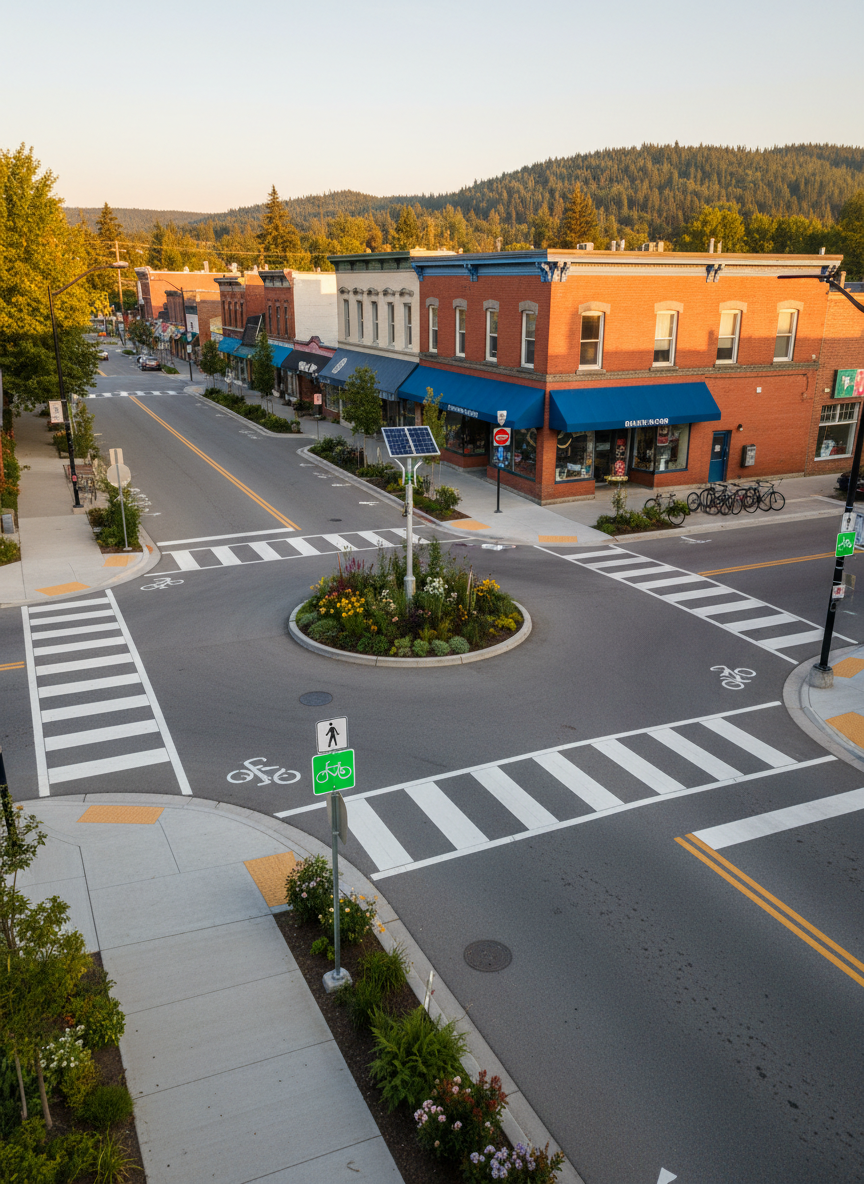
An elevated, photographic view of a small Nelson intersection redesigned for active transportation, with clearly painted crosswalks, a protected bike lane separated by low concrete curbs, and a compact traffic circle landscaped with native plants. Bright, reflective signage and tactile paving at curb ramps emphasize accessibility. In the distance, characteristic Nelson heritage buildings with brick and colorful facades line the street beneath forested hills. Early evening golden-hour light bathes the scene, creating warm highlights on the pavement and soft shadows from planters and light poles. The composition follows the rule of thirds, with crisp detail across the frame, conveying a professional, forward-looking mood that showcases how streets can prioritize walking and cycling without featuring any human figures.

Our role is to align community input with planning processes, ensuring new corridors support cycling, walking, rolling, and transit access.

A well-maintained urban cycling and walking path in Nelson, British Columbia, paved in smooth asphalt with a clearly marked center line and green painted bike lane. The path gently curves toward a distant view of Kootenay Lake and tree-covered hills. On one side, sturdy metal bike racks and a modern bench face the water; on the other, reflective bollards separate the route from a quiet residential street. Soft late-afternoon sunlight creates long, gentle shadows and highlights the fresh pavement markings. Photographic realism, shot at eye level with a wide-angle lens and sharp focus throughout, conveying a professional, dependable mood that emphasizes safe, inviting active transportation infrastructure without showing any people.
A close-up, photographic view of a bright turquoise commuter bicycle locked to a modern brushed-steel bike rack outside a small-town civic building in Nelson. The bike’s frame is clean and slightly reflective, with a weatherproof pannier, sturdy fenders, and wide, grippy tires. Behind it, the building’s stone façade and large glass windows subtly reflect nearby trees and a faint outline of Nelson’s hillside homes. Overcast daylight provides soft, even illumination with minimal shadows, creating a calm, trustworthy atmosphere. Captured at a slightly low angle, using shallow depth of field so the bike is in crisp focus while the background fades into a gentle blur, giving a professional, documentary feel that highlights everyday, practical cycling as community transportation.
An elevated, photographic view of a small Nelson intersection redesigned for active transportation, with clearly painted crosswalks, a protected bike lane separated by low concrete curbs, and a compact traffic circle landscaped with native plants. Bright, reflective signage and tactile paving at curb ramps emphasize accessibility. In the distance, characteristic Nelson heritage buildings with brick and colorful facades line the street beneath forested hills. Early evening golden-hour light bathes the scene, creating warm highlights on the pavement and soft shadows from planters and light poles. The composition follows the rule of thirds, with crisp detail across the frame, conveying a professional, forward-looking mood that showcases how streets can prioritize walking and cycling without featuring any human figures.
A well-maintained urban cycling and walking path in Nelson, British Columbia, paved in smooth asphalt with a clearly marked center line and green painted bike lane. The path gently curves toward a distant view of Kootenay Lake and tree-covered hills. On one side, sturdy metal bike racks and a modern bench face the water; on the other, reflective bollards separate the route from a quiet residential street. Soft late-afternoon sunlight creates long, gentle shadows and highlights the fresh pavement markings. Photographic realism, shot at eye level with a wide-angle lens and sharp focus throughout, conveying a professional, dependable mood that emphasizes safe, inviting active transportation infrastructure without showing any people.

Resources

Find concise project status summaries, downloadable plans, council reports, and related municipal documents that support active transportation decisions across Nelson and Area.